How to choose a web design agency
We are an agency, so read this knowing that. It is also the checklist we would give a friend, including the questions that are least comfortable for us to answer.
Quick answer: ask five questions before signing anything. Who exactly does the work, what is the fixed price and what is excluded, how many revision rounds are included, who owns the site and files at the end, and what happens after launch. An agency that answers all five plainly and in writing is usually a safe choice. Vagueness on any of them is the problem you will have later.
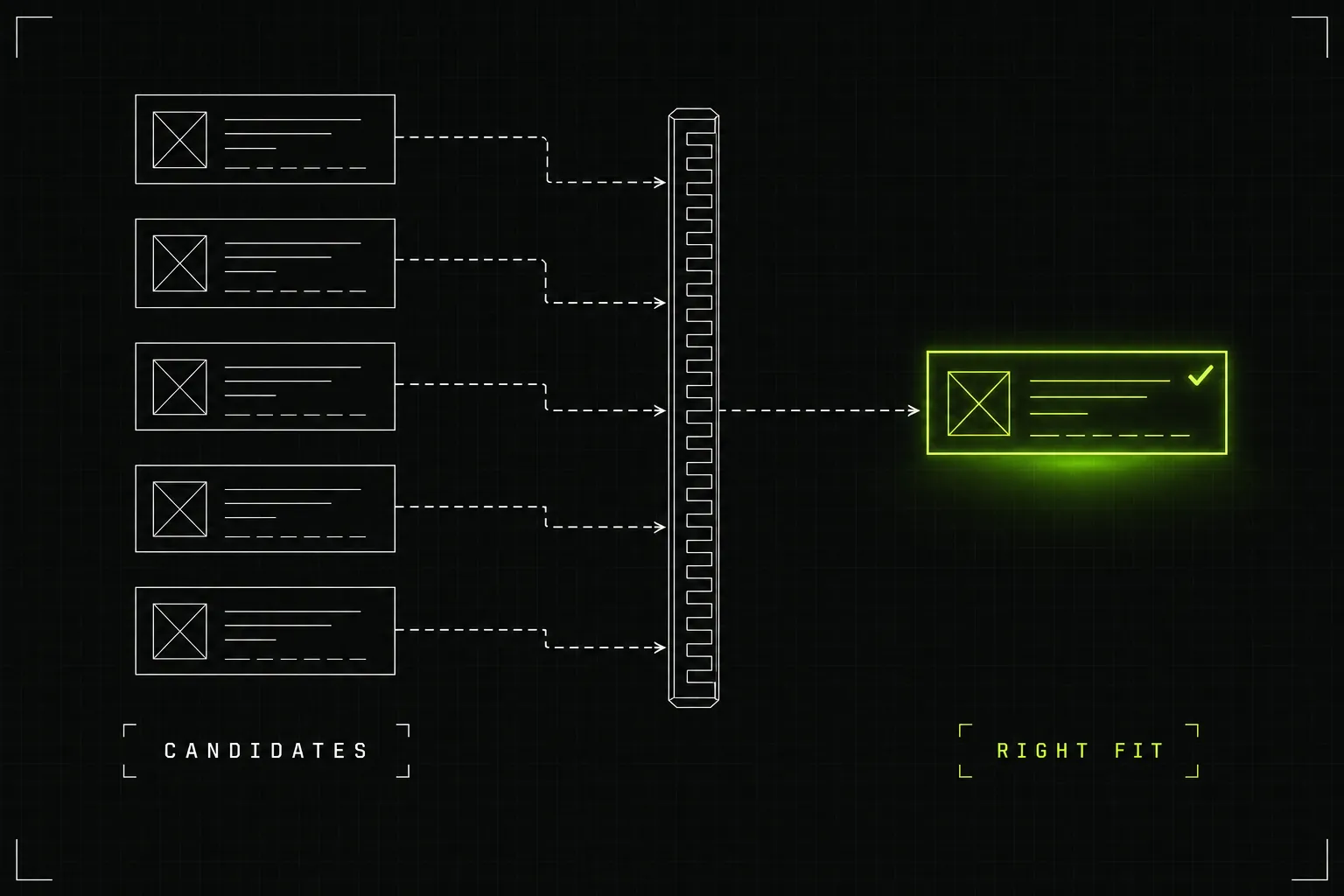
The goal is not the best agency. It is the right fit for the project you actually have.
First, decide what you actually need
Most bad agency choices are made before anyone is contacted, because the brief was never written down. Before you speak to anyone, be able to answer three things: what the site needs to achieve, roughly what you can spend, and when you need it live.
"We need a new website" is not a brief. "We need enquiries from businesses searching for our service in Scotland, we can spend around £5,000, and we want it live before September" is. Agencies quote wildly differently against a vague brief, which is what makes quotes impossible to compare and how projects go wrong.
Which type of provider fits
| Route | Best for | The real risk |
|---|---|---|
| Freelancer | Small sites, tight budgets, a clear brief | Capacity. One person gets ill, takes another project, or goes quiet. Ask what happens if they are unavailable. |
| Boutique agency | Most SMEs, startups and SaaS. Senior people actually doing the work. | Smaller teams can be capacity-constrained too. Ask how many projects run concurrently. |
| Large agency | Complex, multi-stakeholder, heavily integrated projects | Paying for account management, and senior people who sell but do not build. Ask who is actually assigned. |
| Offshore / very cheap | Simple brochure sites where budget dominates | Timezone gaps, communication overhead, and no accountability after launch. Often re-done within two years. |
The five questions that matter
Ask these of everyone you shortlist, and get the answers in writing. They are ordered by how much trouble a vague answer causes.
- 1. Who exactly will do the work? Not the agency name, the people. Whether the person in the pitch is the person building it is the most common gap between expectation and delivery, especially at larger agencies. Ask whether any of it is subcontracted.
- 2. What is the fixed price, and what is specifically excluded? The exclusions matter more than the price. Common omissions: copywriting, photography, redirects on a rebuild, third-party licences, and post-launch support. If they will not give a fixed price once the scope is clear, they have not scoped it.
- 3. How many revision rounds are included, and what counts as one?"Unlimited revisions" sounds generous and usually means an undefined process that stalls. Two structured rounds with consolidated feedback is better for both sides.
- 4. Who owns the site, the files and the accounts? Confirm in writing that you own the design files, the code and the domain, and that hosting is in your name. Some providers keep everything on their own accounts, which makes leaving a rebuild rather than a transfer. Ask directly: if we part ways, what do we walk away with?
- 5. What happens after launch? How long is support included, what counts as a bug versus a change, and what does ongoing help cost. Sites need attention after go-live, and this is where the relationship either works or does not.
How to judge a portfolio properly
Everyone shows their best work, so a portfolio mostly proves an agency can produce something attractive. To learn more than that:
- Visit the live sites. Are they still up? Still fast? Do they work on your phone? A beautiful case study image for a site that no longer exists tells you little.
- Look for reasoning, not screenshots. Good case studies explain the problem, the decisions and the trade-offs. Screenshots with adjectives do not.
- Check for work like yours. Not necessarily your industry, but your shape of problem: ecommerce, a booking flow, a technical product needing explanation.
- Be sceptical of unattributed numbers. "300% increase in conversions" with no client name, timeframe or baseline is decoration. Real results are specific and signed off by the client.
- Ask to speak to a past client. The willingness to arrange it is informative regardless of what the client says.
Red flags worth walking away from
- Guaranteed Google rankings. Nobody controls Google. This one claim reliably predicts other dishonesty.
- No written scope. If what you are buying is not written down, there is no way to say whether it was delivered.
- Refusing a fixed price after scoping. Occasionally justified for genuinely open-ended work. Usually it means the risk is being pushed onto you.
- Your domain or hosting in their name. This is leverage, not a service. It should always be in yours.
- Pressure to sign quickly. Discounts that expire this week are a sales tactic, not a business reality.
- No named contact. If nobody owns the relationship, nobody owns the problems.
- Dismissing your questions. You do not need to understand the technical detail, but you are entitled to a plain-English answer. Condescension now becomes unreachability later.
Comparing quotes fairly
Two quotes are almost never for the same thing, which is why the cheaper one so often costs more in the end. Normalise them before comparing:
| Check | Why it changes the number |
|---|---|
| Page count and template count | Ten pages built from three templates is far less work than ten bespoke pages. |
| Is copywriting included? | Often excluded, and often the thing that delays the project. |
| Design from scratch or a template? | The single biggest driver of price difference. |
| Is a CMS included? | Determines whether you can edit content without paying someone. |
| Redirects and SEO migration | On a rebuild, omitting this can cost you rankings worth more than the whole project. |
| Post-launch support window | Thirty days included versus billed from day one is a real difference. |
| Payment schedule | Staged payments tied to milestones protect both sides. Full payment upfront protects one. |
The questions we find least comfortable
In fairness, here are the ones agencies dislike, including us. If you ask them and get a straight answer, that tells you something.
- Can you show a project that did not go well, and what you changed afterwards? Everyone has one. Only some will discuss it.
- What is your average project overrun against the original date? An honest answer is not zero.
- What would make you turn this project down? An agency that will never say no is selling, not advising.
- Is there a cheaper way to solve my problem than what you are proposing? Sometimes there genuinely is, and it is worth knowing whether they will say so.
How we answer these
So you can hold us to the same standard. Work is done by the people you meet, with nothing subcontracted. Prices are fixed against a written scope, most projects from £2,500 (roughly $3,400), with exclusions listed. Revision rounds are defined rather than "unlimited". You own the design files, the code and the domain, and hosting is in your name. Thirty days of post-launch support is included, and we will tell you when we think you do not need what you are asking for.
For budget, see our UK website cost guide. For timelines, how long a website takes to build. If you are replacing an existing site, the redesign guide covers the migration risk. Or read about our web design service and browse every guide.
Frequently asked questions
What questions should I ask a web design agency?
The five that matter most: who exactly will do the work, what is the fixed price and what is excluded, how many revision rounds are included, who owns the site and files when it is finished, and what happens after launch. Vague answers to any of these predict the problems you will have later.
How do I know if a web design agency is any good?
Look at whether their case studies explain decisions rather than just showing screenshots, check whether the sites they built are still live and fast, and ask to speak to a past client. A portfolio proves they can make something look good. It does not prove the project ran well or that the site performed.
Should I choose a freelancer, a boutique agency or a big agency?
A freelancer is cheapest and fine for a small site, but capacity and availability are the risk. A boutique agency suits most SMEs: senior people actually working on your project at a sensible price. A large agency makes sense for complex multi-stakeholder work, but you often pay for account management and may get junior delivery.
Who owns the website when it is finished?
You should, and you should confirm it in writing before starting. Ask specifically who owns the design files, the code and the domain, and whether the hosting is in your name. Some providers keep the site on their account, which turns leaving into a rebuild rather than a transfer.
Is a cheap web design quote always a bad idea?
Not always, but understand what is missing. Cheap usually means a template, no strategy, no testing, no redirects on a rebuild, and no accountability after launch. That can be perfectly fine for a simple brochure site. It is a poor choice when the site needs to generate enquiries.
What are the biggest red flags?
Guaranteed Google rankings, no written scope, unwillingness to give a fixed price, holding your domain or hosting in their own name, no named point of contact, and pressure to sign quickly. Any one of these is a reason to slow down and ask more questions.