How much does a website cost in the UK?
From £500 template jobs to £50,000 platforms, the word "website" covers a lot of ground. Here are the real 2026 prices, tier by tier, so you can budget with confidence instead of collecting wildly different quotes and guessing.
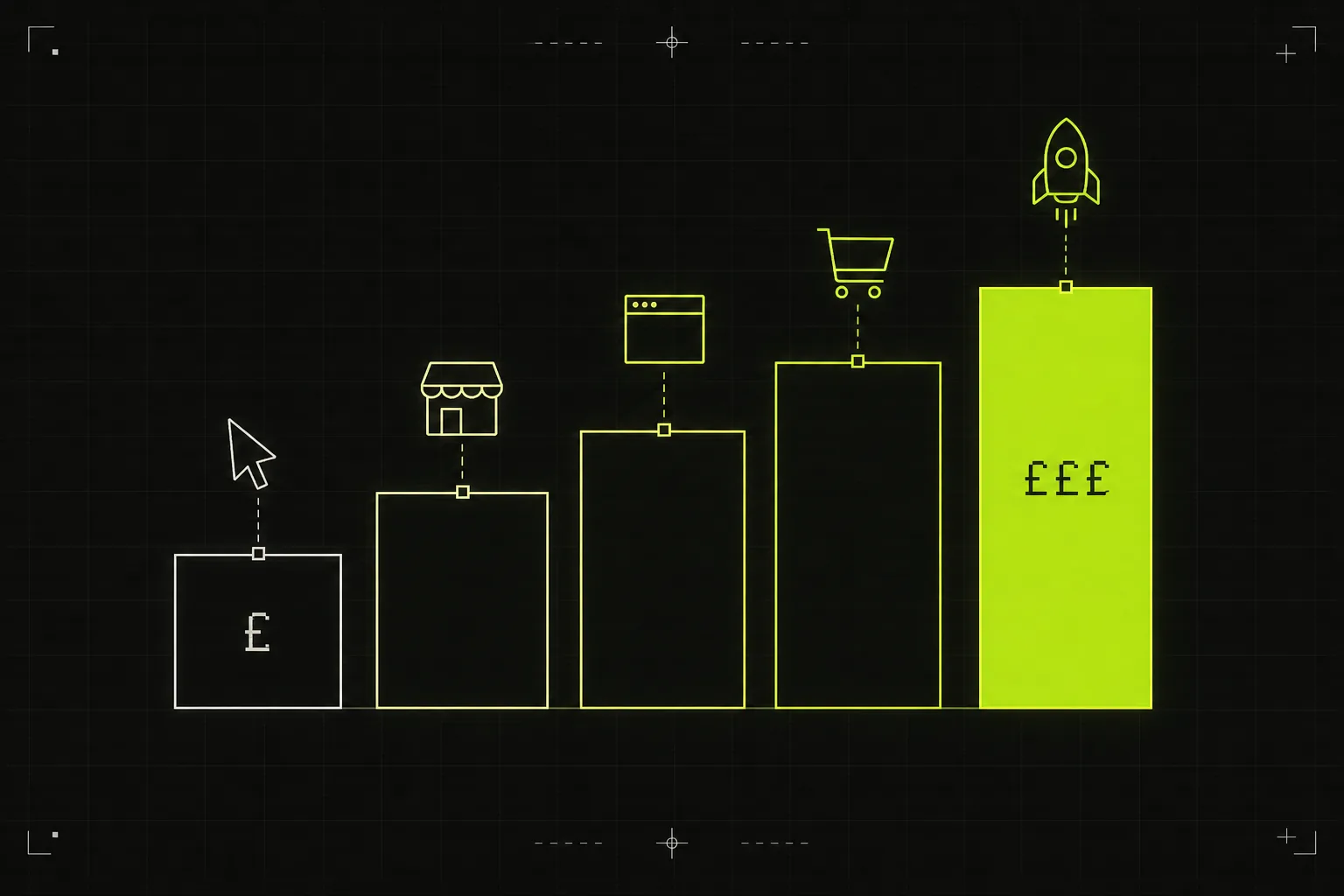
Quick answer: a basic small business website in the UK typically costs £1,000 to £3,000. A custom marketing site runs £3,000 to £10,000, an ecommerce store £5,000 to £25,000, and a large custom or SaaS platform £15,000 upward. Ongoing hosting and maintenance add £20 to £300 per month depending on scope.
UK website prices in 2026, by tier
Two things explain almost all of the variation inside each band: how much of the site is custom designed rather than adapted from a template, and how much strategy work (copywriting, SEO, conversion planning) is included alongside the build.
| Website type | Typical UK cost | Timeline | Best for |
|---|---|---|---|
| Template / DIY (Wix, Squarespace) | £0–£500 + subscription | 1–2 weeks | Solo and side projects, validating an idea |
| Small business site (5–10 pages) | £1,000–£3,000 | 2–4 weeks | Local trades, consultants, startups |
| Custom marketing site | £3,000–£10,000 | 4–8 weeks | Growing SMBs, B2B companies |
| Ecommerce store | £5,000–£25,000 | 6–12 weeks | Retail and DTC brands |
| SaaS / web app / custom platform | £15,000+ | 3+ months | Funded startups, scale-ups |
What affects the cost of a website?
Seven factors move the price more than anything else:
- Number of pages. Most agencies price per template, not per page, so 10 pages built from 4 layouts costs far less than 10 unique layouts.
- Custom design vs template. Adapting a proven template saves 30 to 50 percent. Fully custom design costs more but converts better; it is what separates the £1,500 quote from the £6,000 one.
- Content management system. WordPress, Webflow and Shopify all carry different build and maintenance costs. Webflow tends to cost slightly more upfront and less to maintain; WordPress the reverse.
- Ecommerce functionality. Payments, product catalogues, shipping logic and tax handling add £2,000 to £10,000 over an equivalent brochure site.
- Copywriting. Professional copy for a 5 to 10 page site adds £500 to £2,000. Client-supplied copy is cheaper but usually launches later, because copy is the bottleneck on most projects.
- Integrations. CRM connections, booking systems, member areas and automations each add £250 to £2,000 depending on complexity.
- SEO setup. Technical SEO, keyword mapping and on-page optimisation at launch adds £500 to £1,500. Skipping it is why many new sites get no traffic for a year.
How much does a small business website cost?
£1,000 to £3,000 buys a professional 5 to 10 page site: home, services, about, contact, and a few supporting pages. At this tier you should expect mobile-first design, basic on-page SEO, a contact form, and analytics set up correctly. It is the right tier for local service businesses, trades, consultants and early-stage startups that need credibility and enquiries rather than complex functionality. Be wary of agency quotes far below £1,000; the maths only works with an offshore template job and no strategy at all.
How much does a custom marketing website cost?
£3,000 to £10,000 gets fully custom design, conversion-focused copywriting support, CMS-powered sections, proper SEO architecture, and interaction polish. This is the standard tier for B2B companies and growing SMBs where the website is a sales asset rather than a business card. The jump from the previous tier buys strategy: audience research, messaging, and page structures designed around how your buyers actually decide. This is the tier where our web design service sits, fixed-price from £2,500 and shipped in 2–4 weeks.
How much does an ecommerce website cost?
£5,000 to £25,000 covers a professionally built store on Shopify or WooCommerce: custom theme design, product setup, payment and shipping configuration, email flows, and conversion basics. Small catalogues on a customised theme sit at the bottom of the range; large catalogues, subscriptions, or custom checkout logic push toward the top. We break this down fully in our Shopify store cost guide and in the ecommerce website cost guide, which adds the three-year running total.
How much does a SaaS or web app cost?
£15,000 and up for actual web applications with user accounts, dashboards and databases; funded startups commonly spend £50,000 to £150,000. Marketing sites for SaaS companies (the public site, not the product itself) are a different job: typically £5,000 to £15,000 on Webflow. If that is you, see our Webflow for SaaS service.
How much does web design cost in the UK?
Worth separating, because "web design" and "a website" are often quoted as the same thing when they are not. Design alone, meaning the visual work before anything is built, typically runs £800 to £4,000 for a small business site and £3,000 to £10,000 for a larger custom project. UK designers commonly charge £300 to £600 a day, and a considered small-site design is usually five to ten days of work.
Most agencies, including us, quote design and build together, because splitting them tends to cost more overall and leaves you managing the handover. The reason to know the split is to sense-check a quote: if someone quotes £1,200 for "design and build" of a ten-page site, the design portion cannot be more than a day or two, which tells you it is a template fill.
If you already have a site and are replacing it, the numbers differ again because migration work replaces some of the design work. See our UK website redesign cost guide.
Freelancer vs agency vs DIY
| DIY builder | Freelancer | Agency | |
|---|---|---|---|
| Upfront cost | £0–£500 | £800–£5,000 | £3,000–£25,000+ |
| Ongoing | £15–£50/mo | Variable | £20–£300/mo |
| Strategy and SEO included | No | Sometimes | Usually |
| Best when | Budget is the constraint | The brief is small and clear | The site needs to convert |
DIY builders are genuinely fine for validating an idea. Freelancers are excellent value when you have a tight, well-defined brief and can manage the project yourself. Agencies cost more because you are buying strategy, a team, and accountability for results rather than deliverables.
What are the ongoing costs?
Budget for these annually, whoever builds your site: a domain (£10–£30/year), hosting (£5–£50/month, more for managed), any platform subscription (£14–£40/month for Webflow or Shopify), and maintenance (£30–£150/month on WordPress; near zero on Webflow). A realistic total for a small business is £300 to £1,200 per year. Ecommerce runs higher because of app subscriptions and transaction fees.
How much should you budget?
- Testing an idea: DIY builder, under £500. Do not overinvest before validation.
- Established local business that needs enquiries: £1,500 to £3,000. The ROI case is easy if the site generates even one extra job a month.
- Growing company where the website is part of sales: £4,000 to £10,000. Budget for copy and SEO, not just design.
- Ecommerce as a primary channel: £8,000+. Underspending here costs you conversion rate every single day.
- Funded SaaS: £5,000 to £15,000 for the marketing site, treated as a growth asset with a refresh cycle.
The most expensive website is the cheap one you rebuild 18 months later. For platform-specific numbers, see our guides to Webflow costs, Shopify costs and SEO costs. For timings rather than budget, see how long a website takes to build, and before you appoint anyone, how to choose a web design agency. Still undecided on the build platform? See which website platform you should use. Based in Scotland? Web design prices in Glasgow breaks the same tiers down for the local market. For the monthly figure after launch, see what website maintenance costs, and if you are considering building it yourself, the best website builder for a small business.
Frequently asked questions
Is it cheaper to build a website yourself?
Upfront, yes: £0 to £500 on a DIY builder versus £1,000+ professionally. But factor in your time (30 to 80 hours for a first site) and the conversion gap between a template and a strategically designed site. For businesses that rely on the site for leads, DIY usually costs more in lost enquiries than it saves in fees.
How much does it cost to maintain a website per year in the UK?
£300 to £1,200 per year for a typical small business site, covering domain, hosting, platform fees and basic maintenance. Ecommerce sites typically run £1,000 to £3,000 per year once apps and support are included.
Why do website prices vary so much?
Because 'website' describes both a £500 template job and a £50,000 platform. The variables that matter: custom design versus template, whether copy and SEO are included, functionality (forms versus full ecommerce), and whether you are paying for strategy or just production.
How much does a website cost per month?
Spread over a typical 3 year lifespan, a £2,500 small business site plus running costs works out around £100 to £140 per month. Some agencies offer subscription models at £50 to £250 per month with no upfront fee; check who owns the site if you cancel.
Do agencies charge upfront or in stages?
Most UK agencies split payment into stages: typically 40 to 50 percent to start, with the balance at design approval and launch. Fixed-price quotes are increasingly standard for defined scopes; hourly billing usually signals an open-ended project. ZevGeeks works fixed-price only, from £2,500.