How much does a website redesign cost in the UK?
Usually £3,000 to £10,000, and slightly less than building from scratch. The part worth reading carefully is not the price. It is the migration, because a redesign is the only web project that can leave you worse off than before.
Quick answer: in 2026, a UK website redesign typically costs £1,500–£4,000 for a refresh, £3,000–£10,000 for a full redesign on the same platform, and £5,000–£15,000 if you are also changing platform. Ecommerce redesigns run £5,000–£25,000+. At ZevGeeks, fixed-price projects start from £2,500 and ship in 2 to 4 weeks.
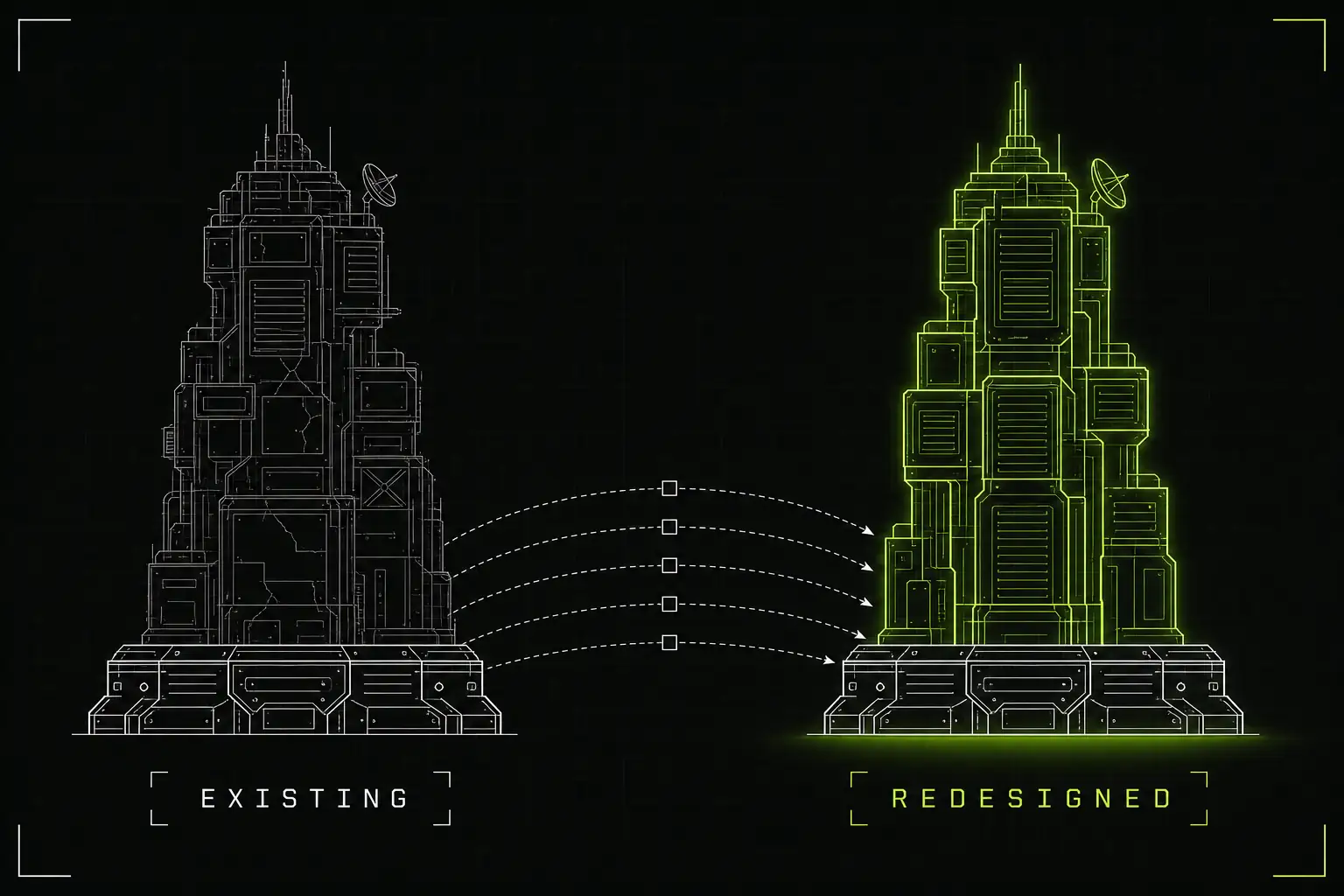
The surface changes. What must survive the move is everything underneath it.
UK redesign costs in 2026
Redesign quotes vary less than new-build quotes, because the scope is partly defined by what already exists. Here is the realistic landscape:
| Type of redesign | Typical UK price | What it involves |
|---|---|---|
| Visual refresh | £1,500–£4,000 | New colours, typography, imagery and layout tidying on the existing structure. No new architecture, no migration. Good value when the site works but looks dated. |
| Full redesign, same platform | £3,000–£10,000 | New design and page structure, rebuilt templates, content reworked, redirects handled. The most common project. |
| Redesign plus platform migration | £5,000–£15,000 | Everything above, plus moving from WordPress to Webflow or similar. Content migration and URL mapping are the extra cost. |
| Ecommerce redesign | £5,000–£25,000+ | Product data, collections, checkout, payment and shipping config, plus everything above. Catalogue size drives the range. |
| Enterprise redesign | £25,000+ | Multi-stakeholder sign-off, integrations, accessibility audit, phased rollout. |
Is a redesign cheaper than starting fresh?
Slightly, but less than most people assume, and it is worth understanding why. A redesign saves you some of the work a new site needs, then adds work a new site never has.
| What changes | |
|---|---|
| You save on | Brand and positioning work that already exists, most written content, product data, and knowing what does and does not convert because you have real analytics. |
| You pay extra for | Auditing what exists, mapping every old URL to a new one, 301 redirects, migrating content and media, preserving metadata, and testing that nothing broke. |
On a small site the savings win. On a content-heavy site with hundreds of URLs and years of ranking history, the migration work can cost more than the design savings, and a redesign ends up slightly more expensive than a new build would have been. That is not a reason to avoid it. It is a reason to ask what the migration line covers before you sign.
The risk that costs more than the redesign
A redesign is the only web project that can leave you materially worse off. Businesses lose significant organic traffic after a relaunch every day, and the cause is almost never the design.
It is one of these, in rough order of how often it happens:
- Missing or wrong redirects. Old URLs return 404s instead of pointing at their replacements, and every ranking those pages held goes with them. This is the single most common cause.
- Changed URL structure without mapping. Moving from /services/web-design to /what-we-do/design is fine if every old path redirects. Without that, you have new pages with no history.
- Content removed to make the design cleaner. The page you deleted because it looked untidy may have been the one ranking. Check analytics before cutting anything.
- Page titles and meta descriptions rewritten wholesale. Titles are a ranking input. Replacing well-performing ones with shorter, prettier versions loses ground.
- Staging site left indexable. A staging environment crawled by Google creates duplicates that compete with the real site.
- Analytics and tracking not carried over. Not a ranking issue, but you lose the ability to prove whether the redesign worked.
None of this is difficult. It is simply work that has to be scoped, and cheap quotes are often cheap because it is missing. Ask explicitly whether a full URL map and redirect plan is included, and treat a vague answer as a no.
When a redesign is actually worth it
Age is the wrong trigger. Plenty of five-year-old sites still convert well, and plenty of one-year-old sites do not. Redesign when you can point at a specific job the site has stopped doing:
- It does not convert. Traffic arrives and does not enquire. This is the strongest reason and the easiest to measure.
- Your team cannot update it. If publishing a blog post or changing a price needs a developer, you are paying for that friction every month.
- It is slow, especially on mobile. Speed affects both rankings and conversion, and it is measurable before you spend anything.
- It misrepresents what you sell. The business moved and the site did not.
- It is unmaintainable. Layers of plugins, broken pages, nobody knows how it works.
- It fails on mobile or accessibility. Increasingly a legal as well as a commercial concern.
If none of those apply and the site simply looks a bit dated to you, consider a refresh at the lower end of the range, or spend the money on traffic instead. A prettier site that converts the same is an expensive way to feel better.
How to spend less without wrecking the outcome
- Redesign your top templates first. Homepage and main service pages usually carry most of the commercial weight. Phasing the rest costs less and de-risks the launch.
- Keep URLs identical where you can. Every URL you do not change is a redirect you do not need and a ranking you cannot lose.
- Reuse content that performs. Rewrite what underperforms. Do not rewrite everything because it feels tidier.
- Fix speed and structure before redesigning. Occasionally that alone solves the problem for a fraction of the cost.
- Get the analytics baseline first. Record current traffic, rankings and conversion before launch, or you will never know whether it worked.
- Insist on a fixed price against a written scope. Redesigns are especially prone to scope creep because there is always one more old page nobody remembered.
What a redesign should include
Anything missing from this list should be a question for whoever quoted:
- An audit of existing pages, traffic and rankings before design starts
- A complete URL map from old to new, with 301 redirects
- Content and media migration, with metadata preserved
- Page titles and descriptions carried over or deliberately improved, not discarded
- Analytics, tracking and search console continuity
- Cross-browser, device and form testing before launch
- A post-launch check on indexing and traffic in the first fortnight
How we handle it
We audit what exists first, so the redesign protects the pages already earning you enquiries rather than quietly replacing them. Redirect mapping is part of the scope, not an extra, and we record your baseline metrics before launch so the result is measurable rather than a matter of opinion.
Fixed price agreed upfront, most projects from £2,500, shipped in 2 to 4 weeks. For the full picture on new builds, see our UK website cost guide. For timings, see how long a website takes to build. If a platform change is part of the plan, Webflow vs WordPress is the place to start. If the site is dated rather than broken, what website maintenance costs covers the cheaper alternative. And if the reason for the redesign is that enquiries have dried up, read why is my website not converting first, because three of the four common causes are cheaper to fix than a rebuild. Or browse every guide.
Frequently asked questions
How much does a website redesign cost in the UK?
A refresh of an existing site typically costs £1,500 to £4,000. A full redesign on the same platform runs £3,000 to £10,000, and a redesign with a platform migration £5,000 to £15,000. Ecommerce redesigns start around £5,000 and reach £25,000 or more. At ZevGeeks, fixed-price projects start from £2,500.
Is a redesign cheaper than a new website?
Usually slightly, but less than people expect. You save on some strategy and content work because both already exist. You add migration work: moving content, mapping every old URL to a new one, and preserving search rankings. On a content-heavy site that migration can cost more than the design savings.
Will a redesign hurt my Google rankings?
It can, and this is the single biggest risk. Traffic loss after a redesign is almost always caused by missing redirects, changed URL structures, removed content or lost page titles rather than the design itself. Done properly with a full URL map and 301 redirects, rankings carry over and often improve because the new site is faster.
How often should a website be redesigned?
Every three to five years is the common answer, but age is the wrong trigger. Redesign when the site stops doing its job: it converts poorly, your team cannot update it, it is slow on mobile, or it no longer reflects what you sell. A site that still performs does not need replacing because it is four years old.
How long does a website redesign take?
Two to six weeks for a straightforward redesign, six to twelve weeks if content is being rewritten or the platform is changing. Migration and redirect mapping add time that a new build does not have, and content is usually the bottleneck. Our fixed-price projects typically ship in 2 to 4 weeks.
Can I redesign in stages instead of all at once?
Yes, and it often makes sense. Redesigning the highest-traffic templates first, such as the homepage and main service pages, delivers most of the commercial benefit for a fraction of the spend. The risk is a site that looks half-finished for months, so agree the phases and dates upfront.